
Why “let’s implement AI” is not a task
“We need AI” describes a tool, not a problem. You cannot put a deadline on it, and you cannot tell whether it worked.
Compare: “an account manager spends two hours a day moving enquiries from WhatsApp into a spreadsheet, and once a week one enquiry gets lost.” That has a frequency, a duration and a cost of failure. From there you can price both the fix and the payoff.
We sell a deadline, not a volume of work. If a deadline cannot be named, the task has not been taken apart yet. Taking it apart is step one.
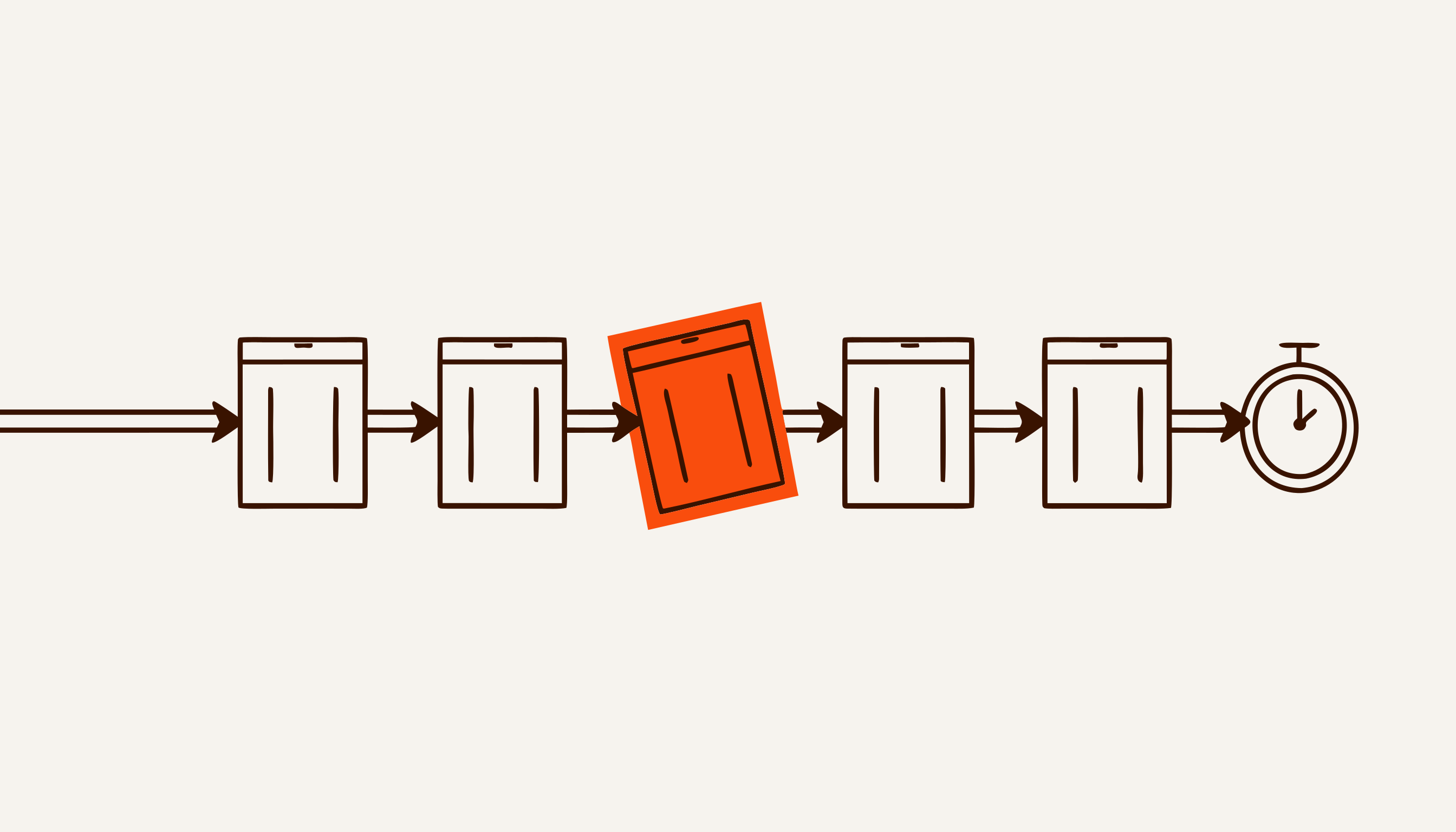
Step one: write the process out, step by step
Take one process — not the whole business. Say, the path of an enquiry from first message to confirmed meeting.
Write it the way it actually happens, not the way it was designed. One step per line: who does it, where the data sits before and after, how long it takes.
Two things usually surface here. There are more steps than you thought. And half of them are moving information from one place to another: messenger to spreadsheet, spreadsheet to CRM, CRM to report.
Step two: count the hours
Next to each step, three numbers: how many times a week it happens, how many minutes one pass takes, how many people are involved.
Multiply. You get hours per month. That is the only unit in which a conversation about automation means anything: not “convenient / inconvenient”, but “this many hours”.
Then add a fourth number — the cost of an error at that step. A lost enquiry costs one deal. A wrong price in a quote can cost the whole margin. A typo in an internal report costs nothing, if someone catches it.
Step three: pick the first step
Automate the step where “hours × cost of error” is largest and the data already exists in digital form.
That last condition rules out more candidates than you would expect. If the information lives only in an employee’s head or in a paper log, there is nothing to automate yet — first it has to start being recorded. That is work too, and it needs no AI whatsoever.
Good candidates all look equally boring:
- moving data between two systems that do not talk to each other;
- assembling the same report by hand every week;
- the first reply to a routine question that arrives ten times a day;
- checking incoming enquiries for completeness and obvious junk.
Bad candidates are the ones that need a human choice with consequences: negotiating a discount, turning a client down, hiring.
When the right answer is “don’t automate”
Three cases where we say so ourselves.
The process runs less than once a week. The saving will not cover the maintenance.
The process is about to change. Automating something that gets rewritten next month means paying for the work twice.
An off-the-shelf model solves it in two days. Then paying for development is silly, and we will say so. Reselling somebody else’s API as our own product is not our job.
Step four: fix the metric before you start
The most important step, and the most frequently skipped.
Before anything gets built, write down in one sentence what counts as success and how it is measured. “Time from enquiry to first reply drops from 40 minutes to 5.” “Two hours a week of manual report assembly disappear.”
A metric written down before the start does two things. It stops the result from being replaced by a feeling that things got nicer. And it shows failure honestly when failure happens — and it does happen.
If the metric cannot be formulated, that is not a reason to start feeling your way forward. It is a sign the process has not been fully taken apart. Go back to step one: there is almost always a missed branch hiding there.
What to do with the result
You end up with a sheet of paper: steps, hours, cost of error, candidate number one, and a success metric. With that sheet you can talk to any contractor — and, more importantly, check what they tell you.
We do this breakdown for free in 48 hours with no intro call: six questions about how things work today, and back comes a map of what to take off people first, second and third. But doing it yourself with the same method takes an evening, and that is a fair option too.
If the breakdown shows that several processes are worth automating, two pages will help: what business automation includes and what it costs, and the whole path from choosing a process to handover in How to automate your business.