
CRM built around your process

We configure amoCRM or Bitrix24 around how you actually sell: pipelines, integrations, automatic tasks. The success metric is fixed in writing before we start: miss it — the stage is not billed.

48 hours
to audit your process before start — free, no call required
2 weeks
to roll out the first circuit: pipelines, integrations, training
3
integrations in the base package — website, telephony, messengers
20+
lead enrichment sources — from directories to open data

Why CRM implementations fail

Half of all rollouts die the same way: the system is bought, managers fill in cards for a week and go back to Excel and WhatsApp. The problem is not the people — the CRM was configured "as boxed" while you sell differently.

We start with the process, not the system: how a lead arrives, who takes it, where it gets lost. The CRM is configured around those steps — then it saves the manager time instead of becoming a second job.

What we configure most often

Leads from every channel

Website, Telegram, WhatsApp, calls — everything lands in one pipeline with its source. The manager sees a queue, not five tabs.

1C integration

Invoices, payments and stock move between CRM and 1C on their own. Accounting and sales see the same numbers.

Automatic tasks

A lead without a task is a lost lead. The system sets "call back in an hour" itself and keeps reminding until the manager closes it.

Scoring and priority

Whoever buys first sits at the top of the list. Scoring rules are tuned to your signals, not to a template.

Reports for the owner

Pipeline, conversion, loss reasons — delivered to a chat on schedule. No "send me the spreadsheet by tonight".

Bots wired into CRM

A bot answers routine questions and opens the deal itself; a human steps in where a human is needed.

Why configuration is not the point

Process before system

First the audit: which steps exist, where leads get lost, what to automate. Then the configuration. Not the other way round.

Metric fixed before start

What counts as success is fixed in writing before work begins. Miss the metric — the stage is not billed.

We hand over, not lock in

Access, settings and documentation are yours. Support by subscription or on your own — your call; we do not keep you on a hook.

You can verify this right now

Leads from this website travel the same route we configure for clients: the quiz is parsed automatically, the lead gets a 0–100 priority and a row in a table — in seconds, with no human involved. Take the quiz below: you will see exactly what your customer would see.

How the work is structured

48 hours

Audit

We break one of your processes down step by step and hand back a map: what can be taken off people, in what order and what it costs. Free, and no intro call.

2 weeks

Pilot

We build one pipeline and run it live. The "before" metric is fixed in writing before the start, not invented afterwards. If we do not hit it, the stage is not paid for.

After that

Handover

The code, the access and the documentation are yours. Everything lives inside your own perimeter. Support by subscription or with your own hands — your call; we do not keep you on a hook.

What it costs

Priced per project, not per hour. The first audit is free: six questions, an answer within 48 hours, no call required to start.

from $1,200

Pipeline

One process end to end: data collection, processing, notifications, reporting. Up to three integrations.

2 weeks

Timeline

+ $300 per month

n8n

What is included

amoCRM and Bitrix24 licences are paid to the vendor directly — we make nothing on them and pick the plan for your team size, not the priciest one.

Frequent questions

amoCRM or Bitrix24 — which one?
Depends on the process. amoCRM is simpler and lands faster in sales teams; Bitrix24 is stronger where you need tasks, documents and a portal. We are not tied to either vendor, so we advise by process, not by partner programme.
We already have a CRM, but nobody uses it
A common case — and cheaper than re-implementing. We find where the process diverges from the configuration, fix pipelines and integrations, retrain the team. It starts the same way: with the free 48-hour audit.
Whose data will it be?
Yours. The CRM is your account, integrations use your keys, the database never moves to us and is not used for anything else. A separate clause in the contract says so.
You leave — and everything breaks?
Access and documentation are handed over at the end of the pilot, every setting is described step by step. Testing us is easy: ask for the handover in week two, not at the end. If a contractor stalls on handover — that is your answer.

Read next

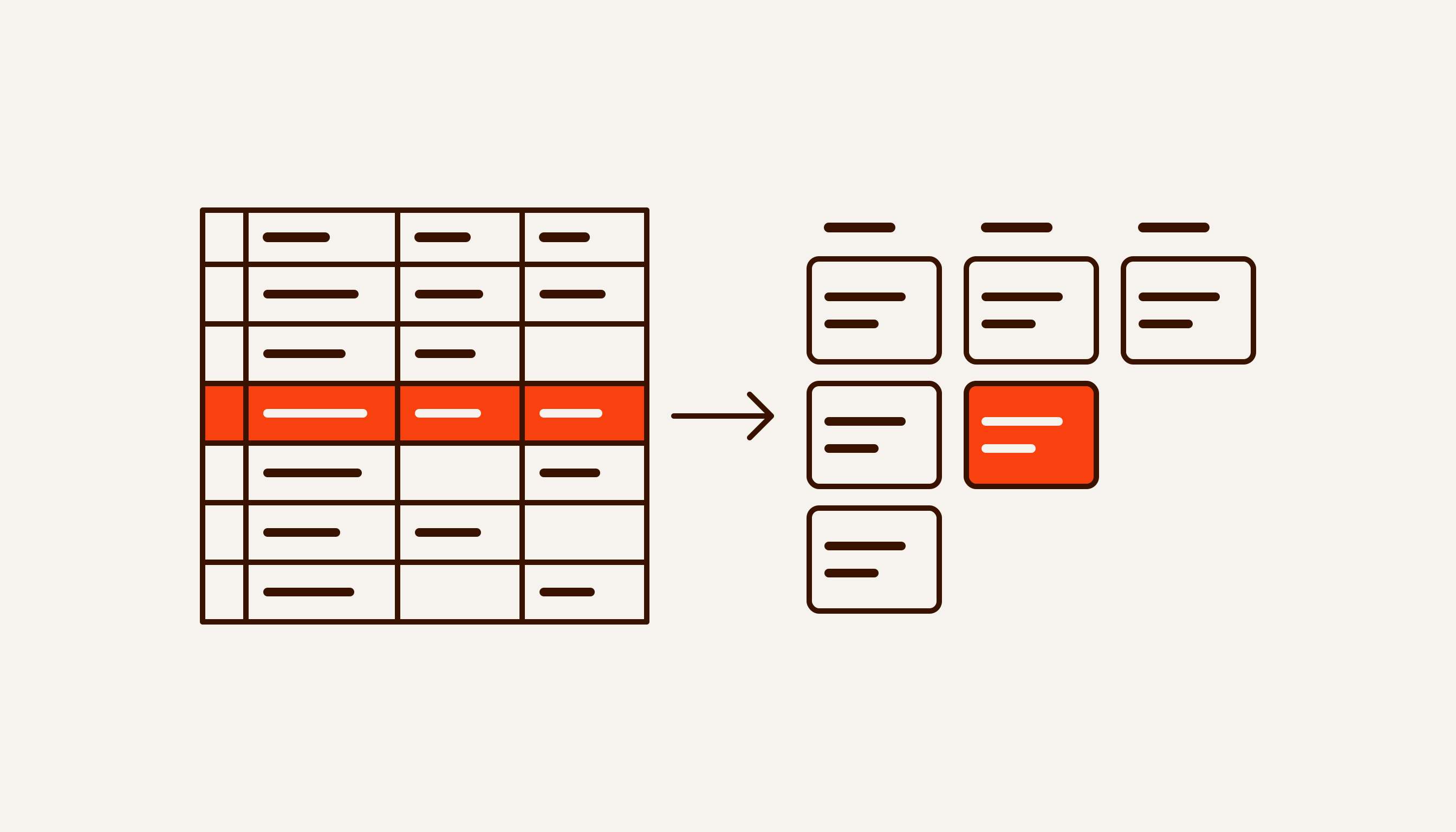
A spreadsheet grid with one orange row, an arrow pointing right, and a board of cards in three columns; one card in the second column is orange too
Sales · 16 min read

Google Sheets as a CRM: a template, the real limits, and when to switch

How to use Google Sheets as a CRM: three tabs, the columns, dropdowns and a rule that highlights overdue follow-ups. Website leads through Apps Script, a morning digest in Telegram, Google's documented limits as of September 2026, six signs it is time for a real CRM, and how to move without losing history.

A stopwatch with the sector of the first five minutes filled in, next to an incoming message bubble with three dots
Sales · 8 min read

How long a lead lives: what is actually known about response speed

“Reply within 5 minutes and your odds rise 100×”: where the figure comes from and what it measured. What HBR, audits of 9,538 and 433 companies, 2026 studies of car dealers and developers, and a peer-reviewed paper say — and why an instant auto-reply does not count.

Show your process — I will send back an automation map in 48 hours

Six questions about how things are set up at your place today. The output is a diagram: what can be taken off people, in what order and what it costs.