By sales automation we mean the work between an enquiry and a deal that a system can take over: picking up a lead from any channel, answering the actual question, asking your script’s questions, booking a meeting, creating a CRM card and making sure the customer does not get stuck. AI earns its place where customers write free text, in Uzbek or by voice message, and the reply has to address the question, not follow a template.
AI CAPITAL FACTORY is a software developer and an IT Park Uzbekistan resident. We build this layer on top of your CRM and messengers, start with one link of the funnel and write the metric down before we begin. Below: where sales leak, what to automate, where a person is needed and how to measure the result.
Where sales are lost
Most sales are lost before a manager ever speaks to the customer: in the minutes before the first reply, at night and at weekends, in forgotten call-backs, in leads that never reach the CRM, and in a report the head of sales only sees at month-end.
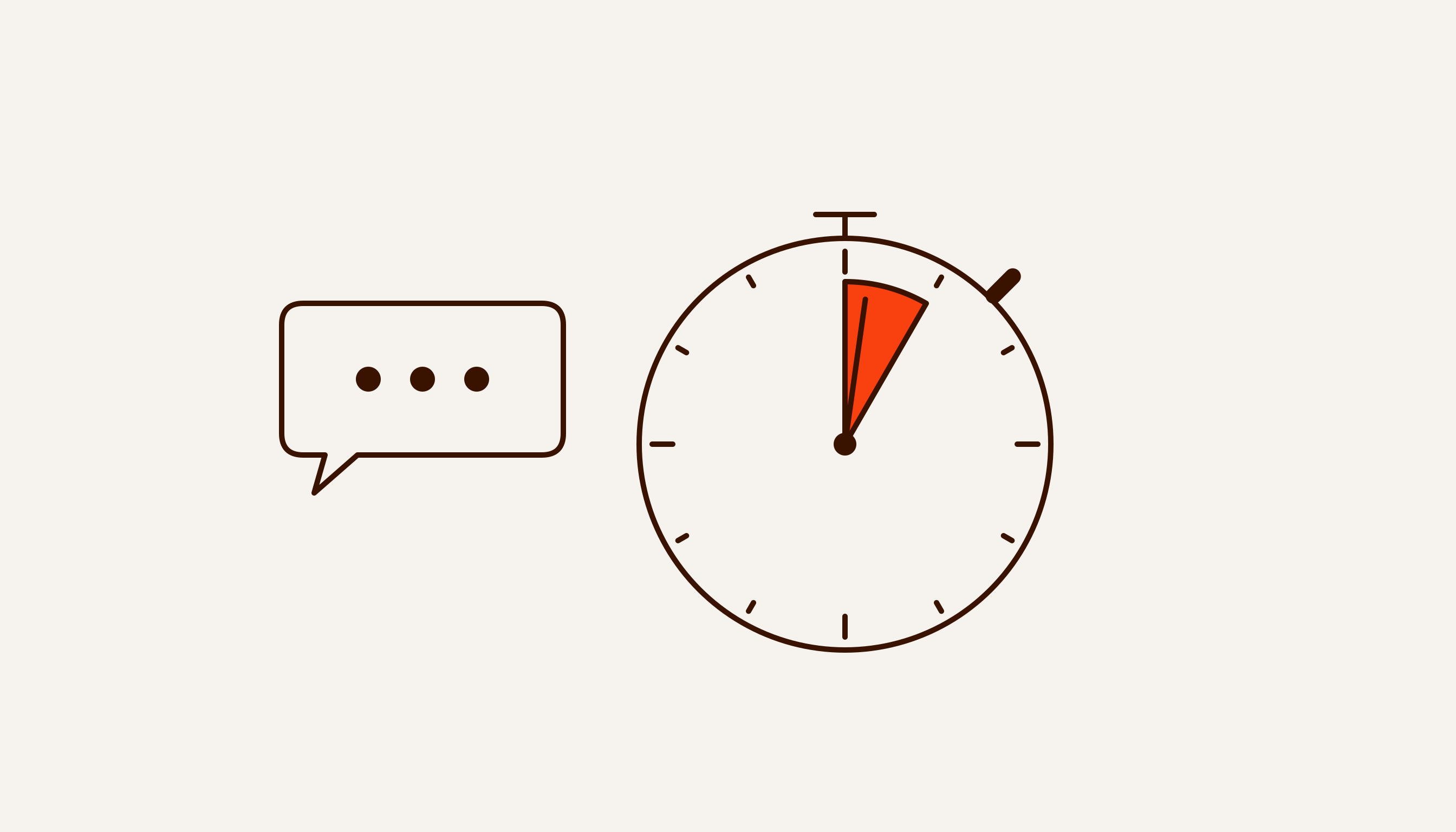
Response speed. The longer a lead waits, the more time the customer has to write to two more companies. Mystery-shopper audits show how fast companies actually respond. In 2013 InsideSales sent test leads through the websites of 9,538 US companies: 47% never responded, and among those that called back, the median time to the first call was 3 hours 8 minutes (InsideSales report, 2014).
Nights and weekends. In that audit, leads went in only during business hours, 8:00 to 17:00, and the median still topped three hours — without a single night-time or weekend lead in the sample. With no one on duty, a lead that arrives after closing waits for the next working day, and at weekends longer still.
Forgotten call-backs. The customer said “I’ll think about it”, the manager promised to call on Thursday, and there is no task for Thursday. In a Yandex Real Estate study of 219,226 calls to the sales offices of Russian property developers in February–May 2026, missed calls were returned in 11% of cases (summary on Rambler, in Russian).
An empty CRM. The system holds whatever a manager had time to enter and did not forget. An Instagram message, a Telegram question, a call to a manager’s mobile live in employees’ phones. To check, compare a week’s enquiries across all channels with new customers in the CRM for the same days. The gap is customers the head of sales does not know about.
The head of sales finds out at month-end. A funnel report shows the outcome, not the minute when the sale could still have been saved. If a lead has waited half an hour, you need to know after half an hour.
These figures come from the US and Russia. We found no measurements of response speed in Uzbekistan, so every sales automation pilot of ours starts by measuring your numbers. Where the popular “reply within 5 minutes and your odds rise 100 times” comes from, and what it actually measured, we unpacked in How long a lead lives.
Sales team automation: the chain from lead to deal
A sales team should automate everything that repeats the same way from customer to customer — most of the work before negotiation. In effect this automates customer handling from the first message to the meeting, in seven links.
- Intake. Leads from the website, Telegram, Instagram, WhatsApp and calls land in one queue, with source and time.
- An answer on substance. Within a minute, 24/7, in the customer’s language: a price from your list, availability, free slots. Not “your request has been received”, but an answer to the question.
- Qualification by your script. The same questions your best manager asks, one at a time: what they need, budget, timing, how they plan to pay. For a car dealership that means model, loan and trade-in; for a developer, number of rooms, floor and instalments.
- Booking. A meeting, a flat viewing, a test drive or an appointment goes into a free slot in your calendar. A staff member confirms the time, and the customer gets the confirmation in the same chat.
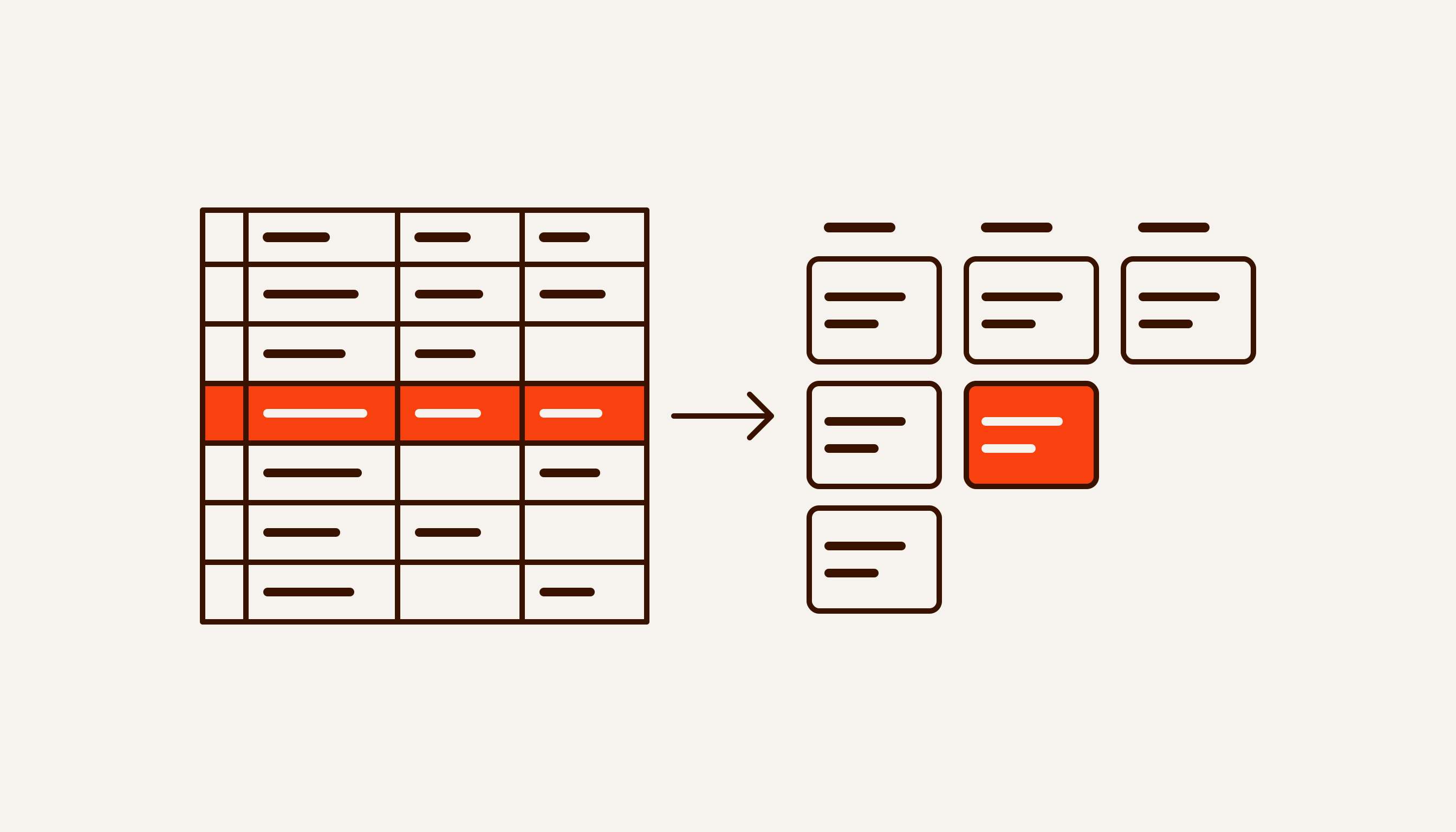
- A card in the CRM. Name, phone, need, budget, source and the full conversation sit in the deal, not in a manager’s phone.
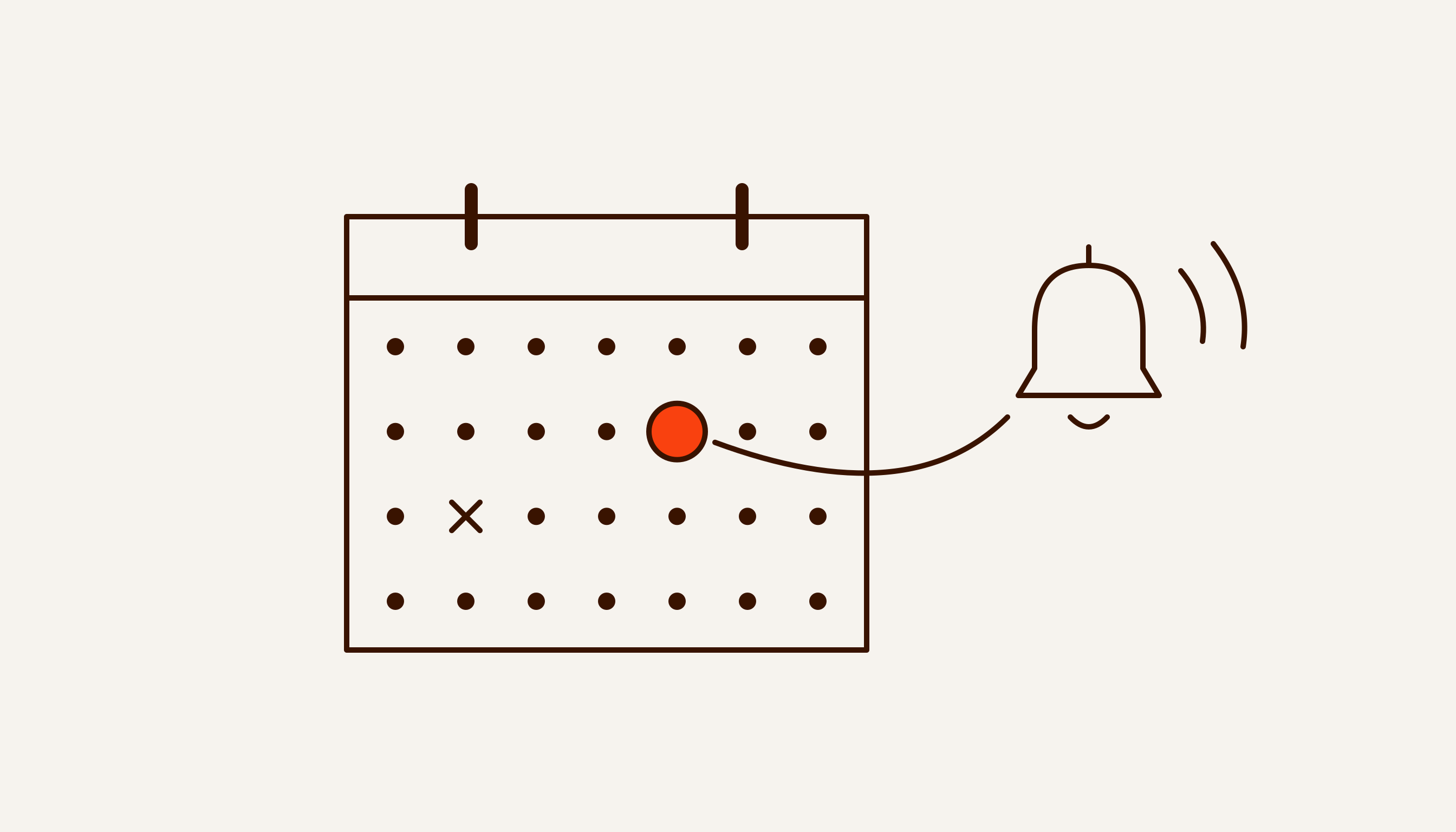
- Reminders. For the customer, the day before and on the day, with “Reschedule” and “Cancel” buttons. For the manager, when a lead is left unanswered: for example, after 10 minutes to them, after 30 to the head of sales.
- A summary for the head of sales. In the evening: how many enquiries came in, which customers are hot, what is stuck and who did not call back.
A separate scenario re-engages those who asked and went quiet, by rules you approve. For outbound sales the chain runs the other way: collecting and enriching the base, scoring, personal messages and calendar booking.
There is no need to build it all at once. The pilot takes one link where the losses show in numbers; the next are added once the first has proven itself. If the bottleneck is not sales but reports, documents or moving data between spreadsheets, start with business automation.
The AI sales agent: what it does and what it leaves to people
An AI sales agent runs the first part of the conversation — answers, clarifies, books, hands over — and stops where decisions about money and exceptions to the rules begin.
On its own it answers from your price list and descriptions, asks your script’s questions, offers free slots, builds the customer card and sends reminders. If the answer is not in your materials, its rule is to say it will check with a manager. A model can break its instructions, so before launch the bot is tested on your customers’ frequent questions, and during the pilot a person reads a sample of chats.
People keep:
- discounts and any terms that are not in the price list;
- deadlines, prices and promises beyond your materials;
- loan and instalment calculations, trade-in valuation, the contract;
- complaints and anything non-routine, passed to a person with the conversation history so the customer does not have to repeat themselves.
The line is strict for a simple reason: a company answers for what its bot says, just as for the text on its own website. That is what a British Columbia tribunal decided in 2024 in the Air Canada case. The demo on this page shows the line at a car dealership: the bot offers a test-drive time and a manager confirms it, a loan calculation in Uzbek goes to the loan manager, and the trade-in price comes from an appraiser.
Automating customer communication does not mean the customer only ever talks to a machine. The bot does not pose as a human: it introduces itself as the company’s AI assistant and does not deny being a bot when asked directly.
It is not only about honesty. In 2026 Management Science published “Speed Is a Signal”, based on 11.6 million conversations on Fiverr and a series of experiments. There, a one-hour delay in replying was associated with a 46% lower chance of being hired, but fast replies lost their advantage when recipients believed they had been generated automatically or by AI (press release).
An instant “thank you, your request has been received” does not work as a signal. A fast answer to the actual question, with a fast, real person behind it, does.
So the handoff to a human is designed at the start, not at the end. In Pied Piper’s 2026 study of 3,290 US car dealers’ websites, when AI could not cope and handed a question to staff, customers were twice as likely to get no personal reply (Business Wire). A bot that said “passing you to a manager” has not solved the task yet. The system has to know whether the manager picked the customer up, nudge them if not, and go quiet in that chat once the manager joins the conversation.
Under the hood, this is an AI agent: a model with tools (price list, calendar, CRM) and rules for when to stop. How an agent differs from a bot or a workflow, and what its risks are, is covered on the page about AI agents.
Lead handling automation: every channel in one queue
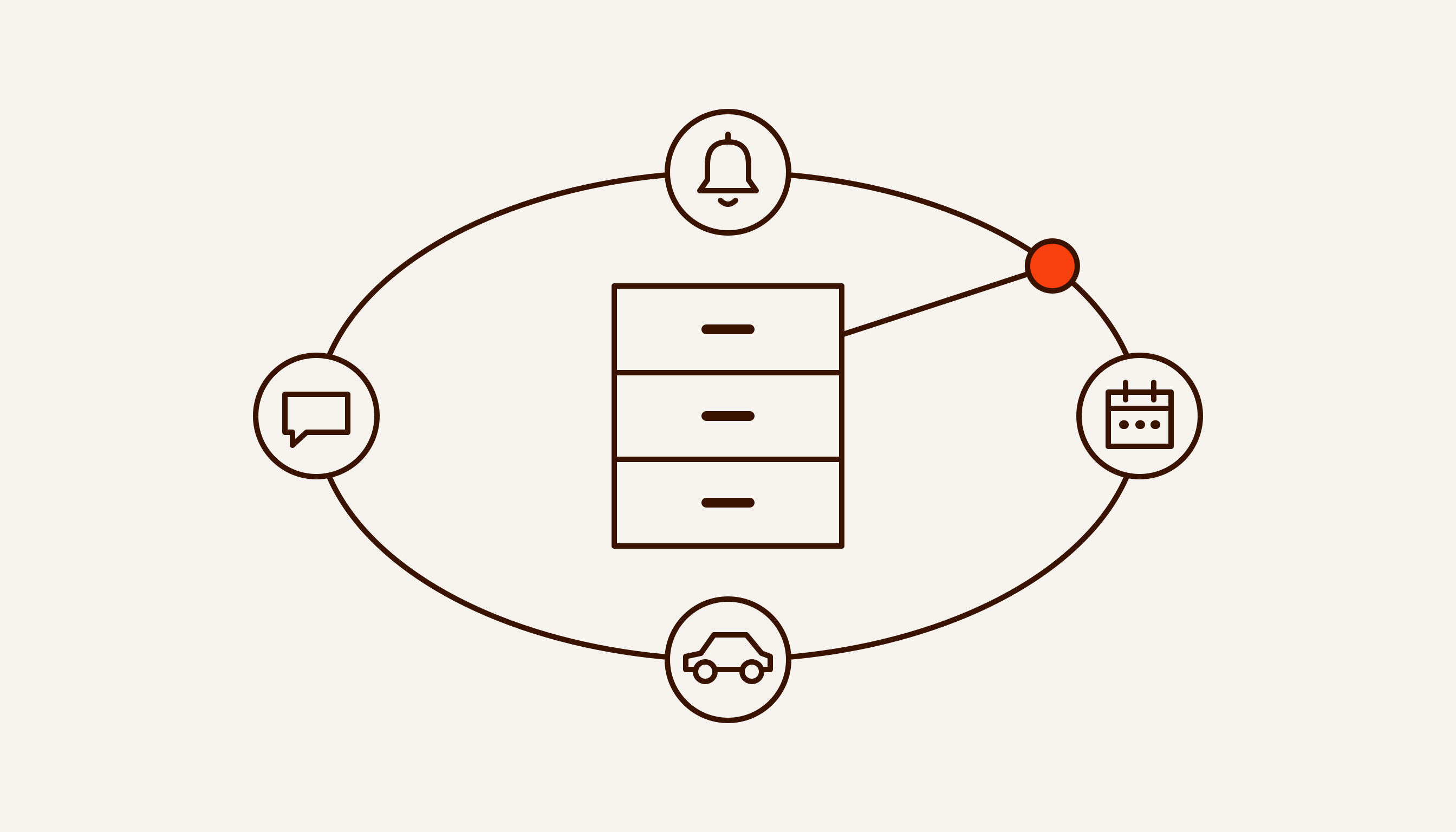
Lead handling is automated like this: every channel feeds one queue, each lead has a time, a source, a status and an owner, and if nobody has picked it up, that shows within minutes rather than at month-end.
- Telegram is the main channel in Uzbekistan. The bot answers in the private messages of your sales team’s account through Telegram Business (a Telegram Premium subscription is required), and the account and number stay yours. A separate bot works too.
- Instagram direct messages go into the same queue instead of staying on the phone of whoever runs the account.
- WhatsApp works through the WhatsApp Business API, on the same logic as Telegram.
- Website forms and site chat join the same queue.
- Calls are covered too: a missed call becomes a call-back task with a deadline. If your telephony records calls, each one is transcribed and checked against a checklist: did the manager clarify the need, did they agree the next step.
The manager sees one queue instead of five tabs. The head of sales sees how many enquiries actually came in, not how many were entered into the CRM. Automating lead intake adds no sales by itself, but it removes the blind spot where leads used to vanish. How the Telegram and WhatsApp bots are built is on the chatbots page.
Your CRM stays the main system
AI sales automation does not require a new CRM: we work on top of amoCRM, Bitrix24 or a dealer’s OEM CRM, and we do not start a second customer database.
Data reaches the CRM via API or, where there is none, as a ready card a manager copies in within a minute. A daily reconciliation against a CRM export shows the head of sales which leads never made it in. We choose the route during the audit, after looking at your system.
An official dealer usually cannot change its CRM: the manufacturer sets it. How to work around such a system without breaking anything is covered in our article on the OEM CRM and on the page for car dealerships.
The layer next to the CRM keeps what the CRM lacks: conversations, response times, reminders. If some data lives in both systems, we agree in advance which one is right. Otherwise in a month the head of sales will have two reports and trust neither.
Conversations and cards stay inside your perimeter, and the model keys are yours. We pick the model for the task and record in the spec exactly what goes into it; sensitive fields can be left out entirely. What Uzbek law says about this is on the AI implementation page.
If you have no CRM or nobody uses it, start there: how we set up amoCRM and Bitrix24 around your process is on the CRM implementation page.
What we measure
We track six funnel metrics, from time to first response to how fast a hot customer reaches a manager, and measure each one “before” first.
| Metric |
How we count it |
Benchmark from published studies |
| Time to first response |
Median from the customer’s message to a reply on substance, separately for daytime, evenings, nights and weekends. Auto-confirmations do not count |
The average hides nights and weekends. InsideSales found a median of over 3 hours to a call even in business hours |
| Unanswered leads |
Share of enquiries across all channels that nobody answered on substance |
In audits, from 14% (calls to developers in Russia) to 47% (website leads at US companies) |
| After-hours leads |
Share of enquiries outside working hours and the response time to them |
We found no published measurements for Uzbekistan; only your own export shows it |
| Lead-to-meeting conversion |
Share of leads that reach a meeting, viewing or test drive, and the share of those that take place |
Compared only with your own “before”: each industry and channel has its own baseline |
| No-shows |
Share of people who booked, did not come and did not cancel |
There is no reliable data for car dealerships. In medicine, reminders cut no-shows by roughly a quarter (breakdown) |
| Hot-customer handoff |
Minutes from the “customer is ready” signal to the manager’s reply |
Pied Piper: when AI handed a question to people, customers were twice as likely to get no personal reply |
The third column is published measurements from other countries and from medicine. We have no client numbers of our own yet, so we will not promise “N% more sales”.
Automating the sales funnel without such a baseline gives a feeling that things are “more convenient”, not a result. One of the six becomes the pilot metric: its “before” value and the target are written down before we start. Miss the number, and the stage is not billed.
We pair metrics so that one cannot be inflated at the expense of another: response speed next to the share of replies a manager did not have to rewrite, booked meetings next to meetings that happened. Why a metric without a pair goes bad is explained in “What gets measured gets managed”.
Sales automation by industry
The mechanics are the same everywhere, but the weak link differs: for a dealership it is the OEM CRM and the test drive, for a developer evening buyers and the price list, for a clinic bookings and show-ups.
- Car dealerships. The manufacturer sets the CRM, leads come from Instagram and Telegram, and the sale hinges on the test drive, the loan and the trade-in. We build the chain around the OEM system without touching it: car dealership automation.
- Property developers. Buyers write in the evening and at weekends and compare several housing projects at once. They need an answer from your price list, with prices and available units, while discounts, mortgages and contracts stay with a manager: automation for developers.
- Clinics. Here the sale is a booked appointment the patient actually attends. The bot books and sends visit reminders, and passes anything medical to a doctor: clinic automation.
How much sales automation costs
One link of the funnel costs from $1,200 plus $300 a month: that is the Pipeline package, 2 weeks. A connected funnel of three or four links, from lead to the evening summary, with its own dashboard and team training, is the Shop floor package: from $6,500 plus $700 a month, 4 weeks.
The price depends on the number of channels and integrations. A Telegram bot with one spreadsheet is one price; a bundle of Telegram, Instagram, telephony and an OEM CRM is another. Pipeline includes up to three integrations.
The monthly fee covers monitoring, fixes when data sources break, and changes. CRM and telephony licences stay yours, and we earn nothing on them.
There are no discounts: if the budget is smaller, we narrow the scope. In Uzbekistan you can pay in UZS at the Central Bank rate on the invoice date. What each package includes is in the pricing block below.
Where to start
Start with one part of the funnel where the losses already show in numbers: after-hours leads left unanswered, meeting no-shows or missed call-backs.
Export a month of chats and calls and count three things: how many leads arrived outside working hours and how long they waited, how many people who booked did not come, and how many promised call-backs never happened. The biggest of the three gaps is the candidate for your first pilot. How to choose a process in general is covered in What to automate first.
Next comes the audit: 48 hours, free, no intro call. Describe the process in the questionnaire, and we send back a map: what to take off people, in what order and at what cost.
The pilot runs live for 2 weeks, with the metric written down before the start. Two weeks are enough with at least a few dozen leads a week; with a smaller flow the pilot should run longer. The audit and the pilot run online, so the timeline and price are the same for Tashkent, Samarkand or any other city.
We have no client case studies with numbers yet: the company has been operating since August 2026. Instead, we offer the metric in the contract and our own systems at work. The Valli bot handles customer conversations in Telegram and hands anything non-routine to a human — it is currently in pilot. CorpVisor watches the process of a manufacturing company in Samarkand: tasks by role, reminders, replies to clients, prepayments and post-delivery debts, a morning summary for the director.