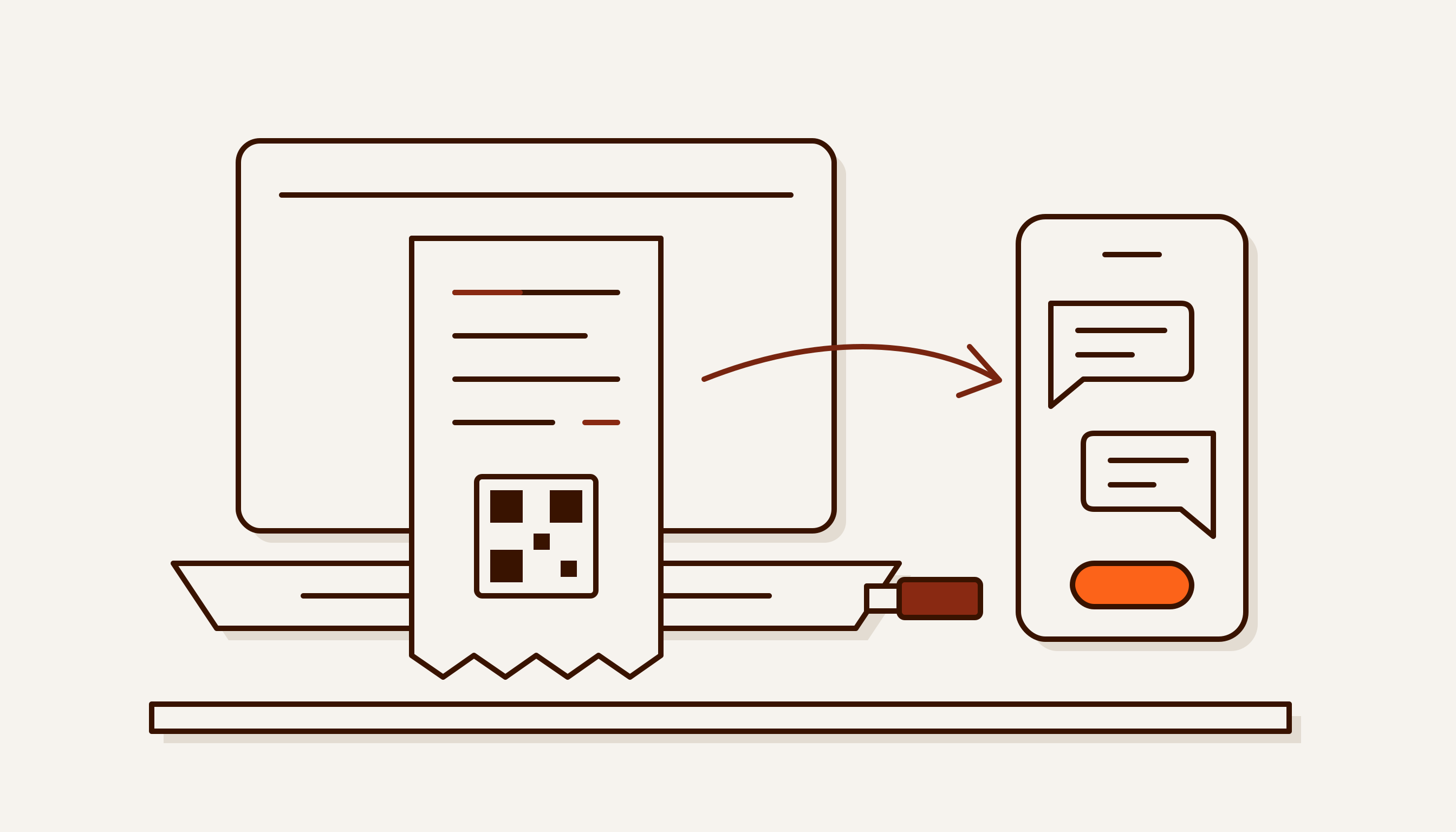
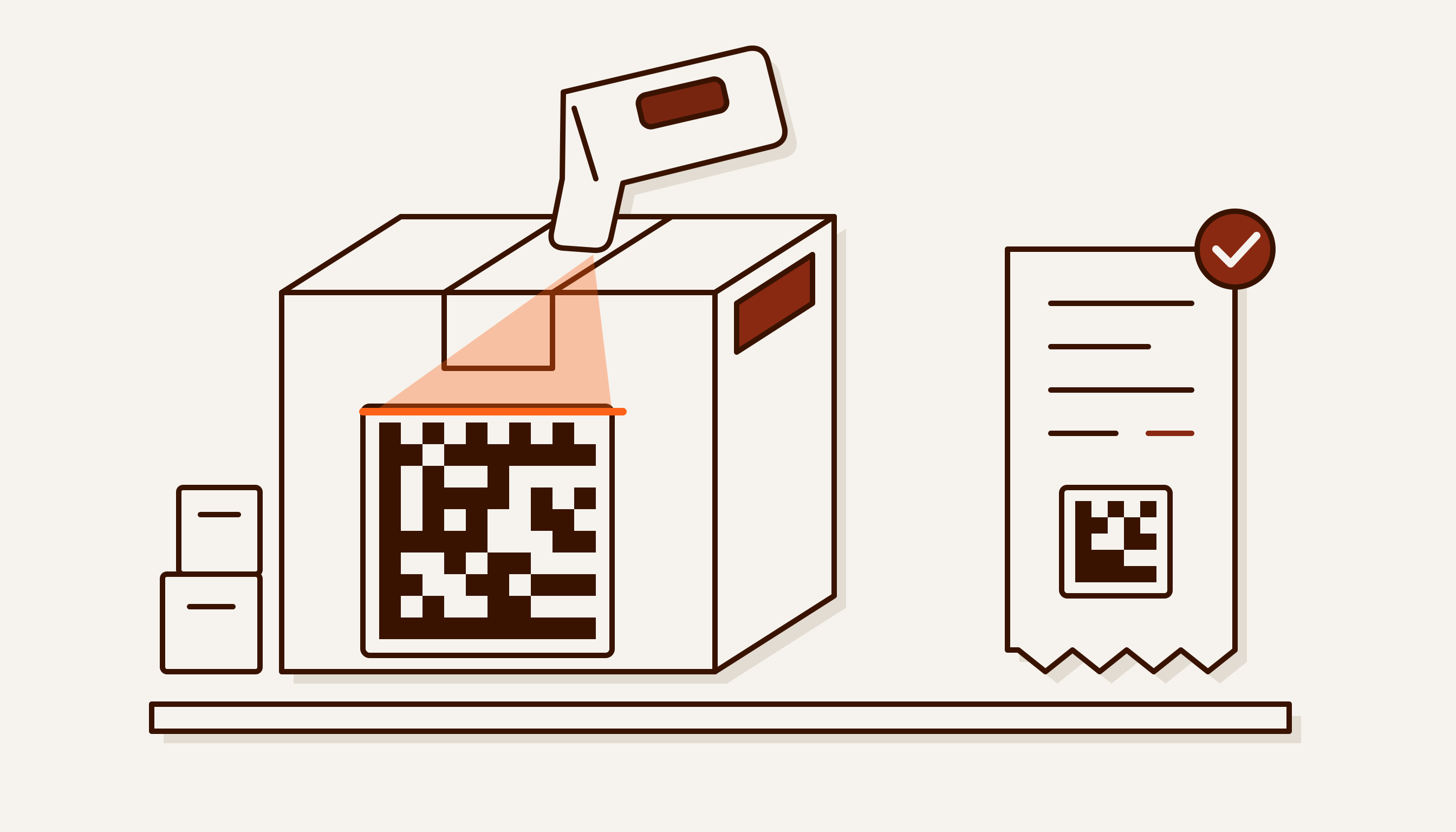
The legal basis is Cabinet of Ministers Resolution No. 737 of 20.11.2020; its list was last amended on 23 January 2026. If your product is on the list, every unit carries a two-dimensional code from the national “Asl belgisi” system. The code travels along the whole chain: from your supplier’s electronic invoice (ESF, the Uzbek e-invoice) into your records and then into the customer’s receipt.
Which goods must be labelled: the list as of 16.11.2026
The list is Annex 1 to Resolution No. 737 as amended by Resolution No. 23 of 23.01.2026. What counts is the HS code (the commodity code used in customs), not the product name, so check your ten-digit code against the annex.
| No. | Group | HS codes | Mandatory labelling starts |
|---|---|---|---|
| 1 | Cigarettes | 2402 20 900 0 | 1 January 2021 |
| 1.1 | Other tobacco products, snus, nicotine liquids, nicotine e-cigarettes | 17 codes from headings 2402, 2403, 2404 | 1 October 2022 |
| 2 | Alcohol other than beer | 2204–2208 | 1 January 2021 |
| 3 | Beer | 2203 | 1 April 2021 |
| 4 | Household appliances: vacuum cleaners, washing machines, refrigerators, TVs, air conditioners, microwave ovens and more | 60 codes from headings 8418, 8450, 8508, 8516, 8528 and others | 15 April 2022 |
| 5 | Medicines and medical products | 3003, 3004 | 1 September 2022 |
| 6 | Water and soft drinks (code 2009 covers juices) | 2009, 2201, 2202 | 1 March 2024 |
| 7 | Mineral fertilisers and plant protection chemicals | 3101–3105, 3808 and others | 1 May 2026 |
| 8 | Electric batteries and their separators | 8507 | 1 January 2026 |
A footnote under the list says the requirement becomes mandatory based on a pilot of at least six months. There is also a second date. Under paragraph 5 of Resolution No. 737, selling a group’s goods without labelling is banned 12 months after the labelling procedure is introduced. For the 2021–2024 groups that deadline has long passed. For batteries and fertilisers, check the exact date of the ban with the operator: it is not in the list.
About lamps. In October 2025, Resolution No. 662 removed headings 8539 and 8540 from household appliances, as spot.uz reported. Resolution No. 23 of 23.01.2026 rewrote the list in full, and four codes from those headings (8539 10 000 9, 8539 50 000 0, 8540 81 000 0, 8540 89 000 0) are back in item 4. This shows in both the Russian text and the official Uzbek text. If you import lamps or electronic tubes, check your code against the current version.
The list is not closed. Paragraph 6 of Resolution No. 737 lets the Tax Committee add to it. Resolution No. 23 approved a pilot for labelling vegetable oil; no date for mandatory labelling has been set.
Who does what in the chain
Only manufacturers and importers apply codes. Everyone else does not print them but must connect to “Asl belgisi” and pass the codes on. That is paragraph 5 of Resolution No. 737, which names marketplaces separately.
| Participant | What they do | Where the code shows |
|---|---|---|
| Manufacturer | Registers the product card, orders and applies codes, puts goods into circulation | In the e-invoice on shipment |
| Importer | The same; without data on the aggregated import code in the customs declaration, goods are not released for free circulation | In the declaration and e-invoice |
| Wholesaler | Receives goods with an e-invoice carrying codes, sells only by bank transfer and does not sell at retail | In the e-invoice on sale |
| Retailer, including online | Receives goods with an e-invoice carrying codes, scans the code at sale | In the online cash register receipt |
If goods are sold under a commission or agency agreement, the commission agent — whoever sells someone else’s goods in its own name — shows the codes in the e-invoice and receipt. Which side is the agent in your contract with a marketplace is stated in the contract itself. Imported alcohol and tobacco are labelled in a customs warehouse.
What a code costs and how to order it
The tariff is set by Cabinet Resolution No. 833 of 31.12.2020: 68 soʻm per code before VAT. With 12% VAT that is 76.16 soʻm, the same figure the operator gives in its memo for businesses of 12.08.2025.
Since 26 May 2025, under Presidential Resolution PP-190, payment works like this:
- you pay for a code after it is applied to the product, not when you order it;
- the 90-day limit on using purchased codes is gone, and money for unused codes counts towards the next order;
- codes for aggregation, meaning boxes and pallets, are free.
According to the operator’s memo, ordering codes takes three steps: a contract with CRPT TURON LLC (the system operator), a topped-up account, and a product card in the “Asl belgisi” National Catalogue. One order covers up to 10 items from one group and up to 150,000 codes per item. The operator does not print or apply codes: for that you hire a service provider or integrator under a separate contract.
Wholesalers and shops do not order codes but do have to register in the system. Per the memo, the operator helps all participants register, wholesale and retail included, free of charge. Under PP-190 the operator also runs a 24/7 call centre, and it posts news and memos in its channel t.me/aslbelgisi.
An illustrative calculation. An importer brings in 10,000 vacuum cleaners. The codes cost 10,000 × 68 = 680,000 soʻm before VAT, or 761,600 soʻm with VAT. Codes for boxes and pallets are free. Label printing and the integrator’s work are priced separately under their contracts; the operator does not set those prices.
What changed in 2025–2026
Since 2025 the rules have become stricter.
| From | What applies | Source |
|---|---|---|
| 1 July 2025 | Wholesale of labelled goods only by bank transfer | PP-190, para. 3 |
| 1 September 2025 | No e-invoice for labelled goods without the code. At retail, the receipt is created only after the code is entered, and a code that was already used blocks the receipt. A labelling violation means a “high” tax risk | PP-190, para. 7 |
| 1 January 2026 | Remote tax audits of labelling violations (the Tax Committee says they start once the Tax Code is amended) | PP-190, para. 8 |
| 1 March 2026 | The register will not sell labelled goods past their expiry date: the sale is blocked automatically | PP-296, para. 1 |
| 1 July 2026 | When an e-invoice is issued, the system itself checks the seller’s licence, its registration in “Asl belgisi” and the codes. An e-invoice for labelled goods to a shop is created only if the shop has a device that reads the codes correctly | Resolution No. 23, para. 4 |
In practice, the last row means that without a scanner that reads labelling codes, your supplier cannot issue you an e-invoice for such goods.
Fines: how much and for what
The scale in Annex 2 to PP-190 applies after the second warning. The percentage is taken from net revenue in the last reporting quarter in which a sale took place.
| Violation after the second warning | Fine |
|---|---|
| First, within one month | 0.2% of revenue |
| Second, within one year | 0.4% |
| Third, within one year | 1% |
| Fourth and further, within one year | 2% plus no VAT refund for a year |
A calculation by the scale: a shop has net revenue of 300 million soʻm per quarter. The first violation costs 600,000 soʻm, the fourth 6 million.
In the resolution this scale is tied to remote audits. In its clarification of 31.03.2026, the Tax Committee says it acts on consumer complaints and on system data. Remote audits start after the Tax Code is amended; audits based on system data follow two warnings. On a complaint, a fine is imposed only after a test purchase with a documented violation. The same clarification gives an example: with turnover of 1 billion soʻm, the fine is 20 million, or 2%. It does not say which scale applies after a test purchase.
Two more consequences. A labelling violation raises a company’s tax risk to “high” (PP-190, para. 7). Pharmacies and medicine retailers found with unlabelled medicines during a tax audit have their licence suspended at the tax authority’s initiative (PP-190, para. 9).
What a shop should do, including a Telegram shop
A retailer does not print codes but can slip up in three places.
- Receiving goods. Accept labelled goods only with an e-invoice that carries the codes. Errors in received e-invoices are visible in the my3.soliq.uz personal account. A buyer has one calendar day, not ten, to sign an e-invoice for labelled goods: see our article on e-invoices in Uzbekistan.
- Paying the supplier. Labelled goods are bought from a wholesaler by bank transfer only. Buying them for cash at a market breaks the wholesale rules.
- Selling. Every code is scanned into the online register receipt; without the scan, no receipt is created. The Tax Committee says a retailer needs no equipment beyond a 2D scanner. Under the Tax Code, until 1 January 2027 a retailer of labelled goods can reduce its tax by the cost of devices that read labelling codes.
In a Telegram shop the last point is the hardest. A shop in a bot is still retail, and the receipt must carry the labelling code as in a physical shop. If Payme or Click issues the receipt for you, ask the service whether it passes the labelling code to the receipt and in which field the bot should send it. Get the answer in writing before you start selling. If the service cannot do it, ring up labelled goods on your own register with a scanner. We describe how receipts work in a bot in our article on virtual cash registers, and the general rules for online trade in the article on Telegram shops and law ZRU-792.
Before your first sale of a labelled group, check:
- your product is on the list by HS code;
- your company is registered in “Asl belgisi”;
- your supplier’s e-invoices carry the codes;
- your register and scanner read labelling codes, and your product cards carry the IKPU (the national product and service identification code) for labelled goods — paragraph 5 of Resolution No. 737 requires this;
- expired goods are off the shelf.
Where we stand, honestly
We are not the labelling operator, we do not sell scanners or labels, and we do not register companies in “Asl belgisi”. That is done by CRPT TURON and service providers. We build chatbots for Telegram and process automation: the bot takes orders and requests and sends them to a spreadsheet, CRM or 1C. A bot costs from $300 and takes 2 weeks to build; from the second month there is a subscription of 700,000 soʻm a month. Linking the bot to a CRM or 1C is the “Pipeline” package, from $1,200 plus $300 a month.
Passing the labelling code from an order through the bot into the receipt is a separate task that depends on your register and payment service. It is not included in the “from $300” bot price. We have no client case studies with numbers yet. If you sell labelled goods via Telegram or a website and are not sure how the code reaches the receipt, describe your process in the quiz on the home page: the first review is free, with an answer within 48 hours.