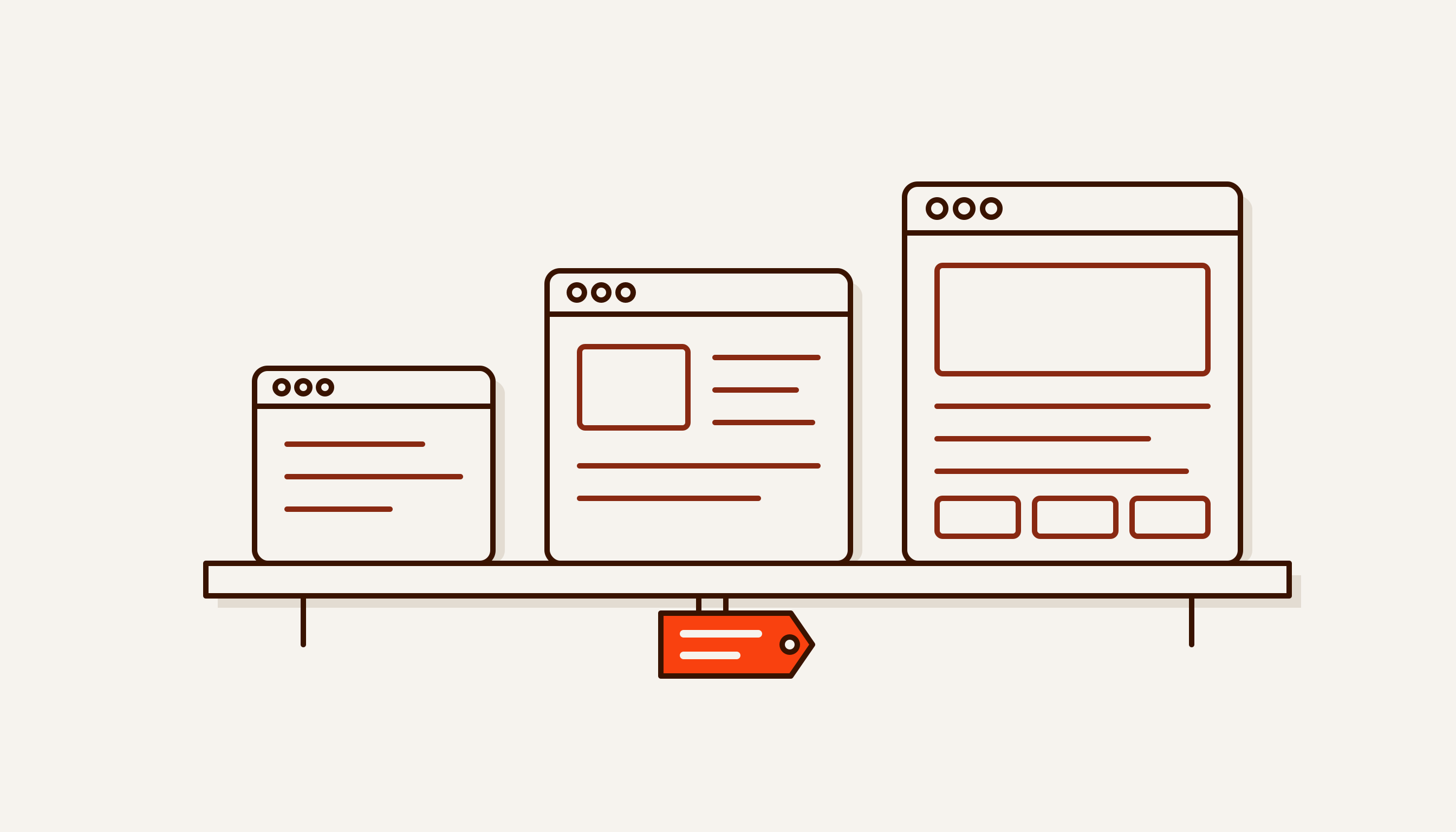
Landing page or website: it depends on the task. A landing page fits when you have one offer and you bring people to it yourself, through ads, from Instagram or from a Telegram channel. A multi-page website fits when you have many services and want search engines to bring people in, with a page for each service. A catalogue or an online store fits when you have more products than one page can hold. A business card site fits when you simply need a site to exist: to show who you are and how to reach you.
What each option costs in Samarkand and Tashkent is in our article “How much does a website cost in Uzbekistan”.
What a landing page is, in plain words
A landing page is one long page that leads a visitor to one action: send an inquiry, book, call, message you on Telegram. Everything on it serves that action. The headline names the offer, then come the arguments, answers to objections, a price or a “from” price, and the same button repeated several times.
A landing page has no “About us”, “News” or “Careers” menu. A visitor who clicked an ad for made-to-order kitchens sees made-to-order kitchens and nothing else.
What a business card site is
A business card site (the usual term in Russian-speaking markets, close to a “brochure site”) is one page or a handful of pages about the company: who you are, what you do, where you are, how to get in touch. It does not sell one specific offer; it confirms that the company exists. People open it after a meeting, from the link in an Instagram profile or an email signature, to check the address and phone number.
A one-page business card site looks like a landing page. The difference is the goal: a landing page has one action, a business card site has general information.
A multi-page company website
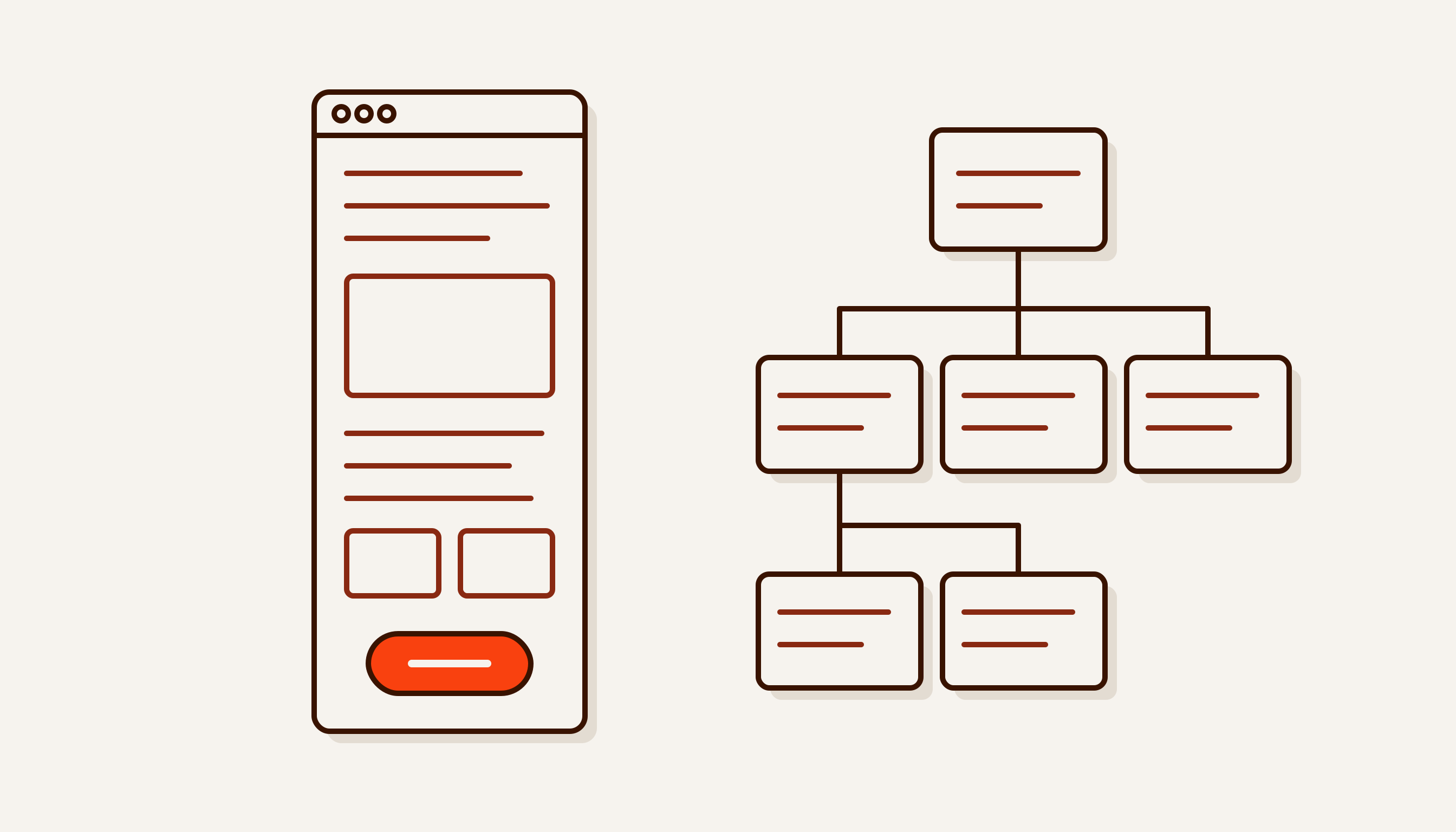
A company website has a home page plus a separate page for each service, an about page, contacts and often a blog. Each page answers its own question and can bring people in from search on its own. A dental clinic with separate pages for implants, braces and children’s dentistry gets three entry points from Google instead of one.
Catalogue and online store
A catalogue is a site built around product or property cards with filters: building materials, furniture, flats in a new development. If the order goes to a manager who calls the customer back, it is a catalogue with inquiries. If the customer adds items to a cart and pays on the site through Click or Payme, Uzbekistan’s local payment services, it is an online store.
| Landing page | Business card site | Company website | Catalogue / store | |
|---|---|---|---|---|
| Pages | 1 | 1–5 | 5 and more | dozens to hundreds |
| Goal | one action | show who you are | explain each service | choose a product and order |
| Where people come from | ads, social media, mailings | profile link, business card | search, ads, social media | search, ads |
| Build time | shortest | short | longer | longest |
Landing page or multi-page website: a table by task
| Task | What to choose | Why |
|---|---|---|
| Advertising one service | Landing page | Someone who clicked an ad about one service should see that service at once, not the home page |
| A promotion, launch or event | Landing page | It lives for a month or two and is then switched off |
| Several services for different customers | Company website or several landing pages | One page about everything blurs every offer |
| Customers from search across many queries | Multi-page website | Each query needs its own page |
| More products than fit on one page | Catalogue | Products need filters and search |
| Payment on the site | Online store | It needs a cart and a connection to Click or Payme |
| The site simply has to exist | Business card site | Address, phone, hours, a Telegram link |
| Two languages: Russian and Uzbek | Any type, but with separate URLs | Otherwise search sees only one language |
How a landing page relates to SEO
Search shows a page, not a site. A page has one <title>, and Google advises that every page has one that describes that page. So one page usually serves one group of closely related queries well: “kitchens to order Samarkand”, “custom kitchen price”, “kitchen manufacturing”. The same page will struggle with “sliding wardrobes” and “walk-in closets”: those need their own pages with their own titles and URLs.
Hence a simple rule. If you plan to win customers from search for five different services, you need at least five pages. A single landing page will lose that contest to a multi-page site.
Languages work the same way. Google recommends a separate URL for each language version of a page rather than switching language through cookies or browser settings. Many sites in Uzbekistan need both Russian and Uzbek. If the Uzbek version of a landing page only appears after a button click and lives at the same URL as the Russian one, search may simply not see it.
For advertising, on the other hand, a landing page is convenient. In Google Ads, landing page experience is one of the three components of Quality Score, alongside expected click-through rate and ad relevance (Google Ads Help). A page that talks about exactly what the ad promised meets that requirement naturally.
A quiz or a Telegram button
A landing page can take inquiries in different ways.
A quiz is a few multiple-choice questions: “What kind of kitchen? Straight, L-shaped, U-shaped. What budget?” At the end, a phone number. The upside: the manager gets a ready inquiry with the details. The downside: every extra question is a chance that the visitor closes the page.
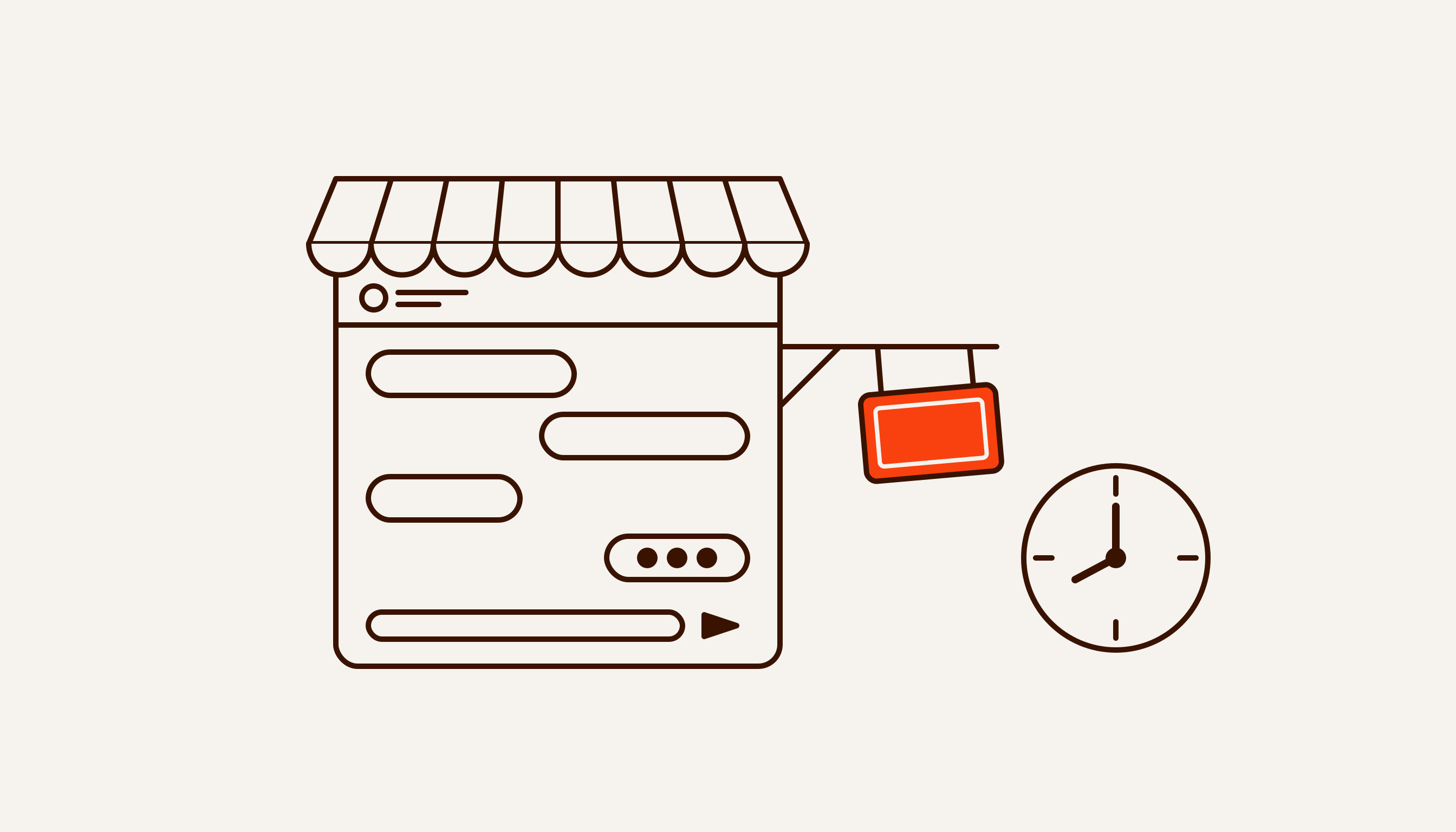
A Telegram button. In Uzbekistan many people would rather write in Telegram than fill in a form. A t.me/username?text=... link opens a chat with you and pre-fills the message field with ready text, such as “Hello, I’d like a kitchen measurement” (Telegram documentation). The customer only has to press Send. Different buttons can carry different texts, so you see at once where a message came from.
You can have both: a quiz for those ready to answer questions and a button for those who want to ask straight away. What matters is that the message does not sit unanswered: why the speed of the first reply matters so much is covered in “How long a lead lives”.
Landing page + Telegram bot
A strong pairing for a small business: the landing page explains the offer, and the bot takes the inquiry and answers the first questions at any hour.
The button on the landing page leads not just to the bot but to a link with a parameter: t.me/bot_name?start=kitchens_instagram. The bot receives that parameter with the first message (Telegram documentation); it can be up to 64 characters of Latin letters, digits, _ and -. That way the bot knows which landing page and which ad the person came from and can pick up the right conversation at once: “You were looking at L-shaped kitchens — send us the wall dimensions.”
If you would rather reply from your own account than from a separate bot, there is Telegram Business: see “Telegram Business explained”.
Examples for businesses in Uzbekistan
- Made-to-order kitchens and furniture in Samarkand. A landing page for Instagram ads, a quiz “kitchen type, dimensions, budget”, a Telegram button. When wardrobes and walk-in closets are added, a second landing page or a site with a page for each kind of furniture.
- A dental practice or clinic. A company website: a separate page for each specialty and each doctor, booking through Telegram. A separate landing page for a promotion.
- A training centre. A landing page for each course: IELTS, maths for university entrance, programming for children. Each course has its own audience and its own ads.
- A building materials or plumbing shop. A catalogue with filters and orders sent to a manager on Telegram. A landing page will not cope here.
- A property developer. A landing page for each residential complex with floor plans and prices, and a bot that answers at night and books viewings.
- A hotel or a guide in Samarkand and Bukhara. A site in Russian, English and Uzbek with a separate URL for each language: foreign visitors search in their own language.
Where we stand, honestly
Our own site, aicapitalfactory.com, is a multi-page one: a page for each service, a blog and a quiz whose inquiries land in a Google Sheet. estiq.aicapitalfactory.com and suv-ai.online are product sites where a scroll scene explains how the product works.
What to do next
Write down where your customers will come from in the next three months: ads, search, social media, referrals. And how many offers you have that need to be explained separately. If there is one source and one offer, start with a landing page. If there are several sources and many services, you need a website. Our landing pages start at 4.9 million so’m (≈ $415) and company websites at 12.9 million (≈ $1,090); details are in our price list (PDF, in Russian). Tell us about your task on our website development page: we will help you choose and name a price after the brief.